Leukocyte Stabilization Tube
Preserves leukocyte surface antigens in human peripheral specimens for up to 22 days. A pre-filled vacuum tube that stabilizes lymphocyte immunophenotype — enabling batch research processing, multi-site collection, and extended sample transport without compromising flow cytometric results.
Four core capabilities
- 22-day, two-phase stabilityPreserves leukocyte surface antigens (CD3, CD4, CD8, CD19, CD16/CD56) for up to 22 days: room temperature for Days 1–7, then refrigerated through Day 22. SD <1.0% across all subsets.
- Simple transfer workflowCollect a specimen into a standard EDTA collection tube, then transfer 2 mL into the Stabilization Tube using a specimen transfer device within 2 hours. Gentle inversion to mix — no pipetting, no manual reagent addition.
- Multi-site, batch-friendly designNo cold chain required during the first 7 days, enabling multi-site collection and transport; refrigerated storage extends stability through Day 22. Collect samples over multiple days, then analyze together in a single run — reducing inter-run instrument variability and saving laboratory time.
- Surface antigen preservationStabilizes leukocyte membrane integrity and preserves surface antigen binding sites for downstream multicolor flow cytometric immunophenotyping — compatible with all major antibody vendors and flow cytometer platforms.
- Simpler, safer handlingPre-filled and vacuum-sealed closed system: protects the operator from the stabilization solution and ensures precise, quantitative transfer during specimen collection.
Workflow
Collect & Transfer
Collect the venous specimen into a standard EDTA anticoagulant vacuum collection tube using standard venipuncture technique for research specimen collection. As soon as possible following collection — ideally within 2 hours — use a specimen transfer device to transfer the specimen from the EDTA collection tube into the Leukocyte Stabilization Tube. The tube vacuum is factory-calibrated to draw exactly 2 mL of specimen. Once the vacuum draw stops, do not force additional specimen into the tube.
Mix
Immediately after transfer, gently invert the tube 5 to 8 times to ensure thorough mixing of the specimen with the stabilization solution. Do not shake.
Store / Analyze
Store at room temperature (22–28°C) or refrigerated (2–8°C) for Days 1–7, then transfer to and maintain refrigerated storage (2–8°C) through Day 22. Samples remain stable for up to 22 days under this protocol. At any point within this window, process according to standard flow cytometry protocols for lymphocyte immunophenotyping.
Lymphocyte subset stability over 22 days
Internal validation using human peripheral specimens (n=20) demonstrates stable multicolor flow cytometric lymphocyte immunophenotyping for up to 22 days at room temperature (Days 1–7) followed by refrigerated storage (Days 8–22). SD <1.0% across all subsets.
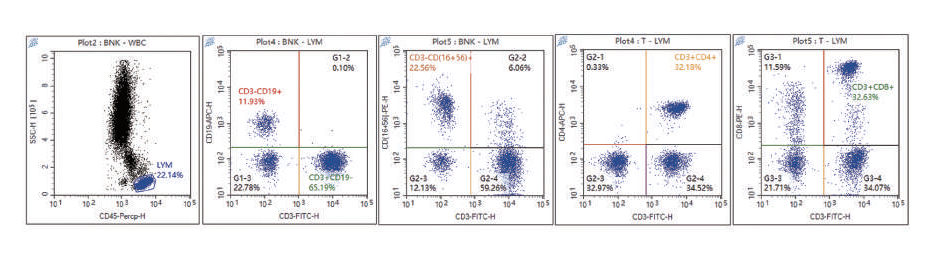
Scatter plot comparison — EDTA vs. Leukocyte Stabilization Tube
Human peripheral specimens. Side-by-side multicolor flow cytometry comparing EDTA-anticoagulated blood with Leukocyte Stabilization Tube at Day 1, Day 3, Day 5, Day 7, and Day 22.
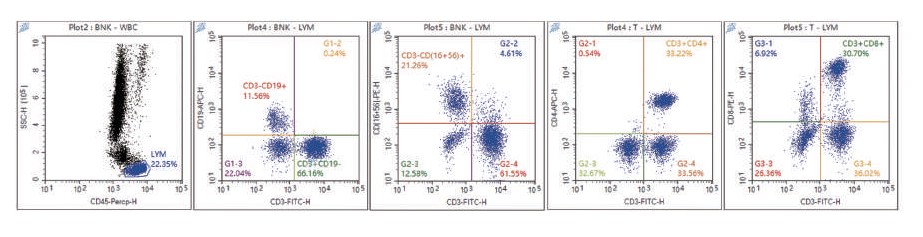
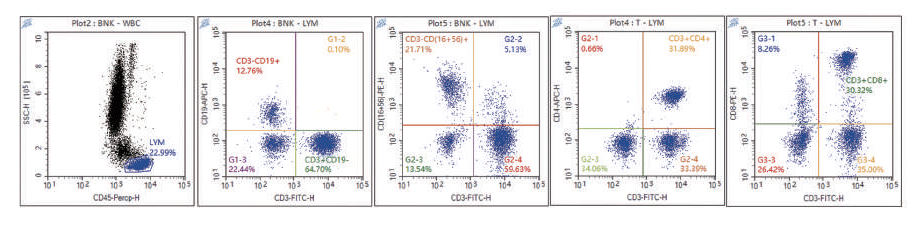
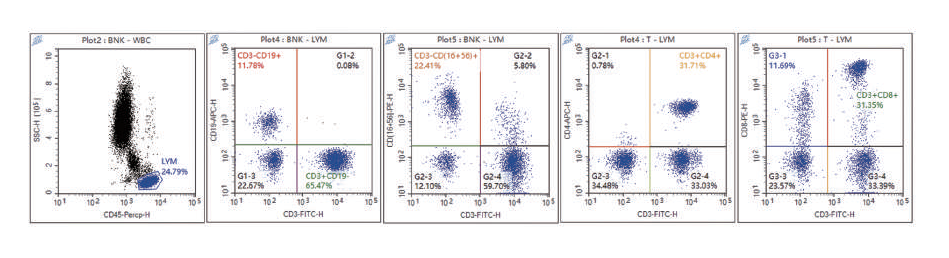
Human peripheral specimens, n=20. FOR RESEARCH USE ONLY. Not for use in diagnostic procedures.
- For Research Use Only. Not for use in diagnostic procedures.
- Performance data established using human peripheral specimens under standard research laboratory conditions (n=20).
- Specimen should be transferred from the collection tube into the Leukocyte Stabilization Tube ideally within 2 hours of specimen collection. Overfilling or underfilling will result in an incorrect specimen-to-additive ratio and may lead to suboptimal product performance.
- Do not use tubes past the expiration date, if damaged or cracked, or if the tube has lost its vacuum. Product is intended for use as supplied — do not dilute or add other components to the tube.
Common questions
Why use EDTA instead of citrate for the initial draw?
Leukocyte immunophenotyping is standardly performed from EDTA-anticoagulated blood, as EDTA best preserves leukocyte morphology and surface marker expression. This differs from platelet tubes, which use citrate.
Must the transfer happen within 2 hours?
Ideally yes. Longer delays before stabilization may introduce pre-analytical variability that the tube cannot fully correct.
How should tubes be shipped?
Filled tubes can be shipped at ambient temperature for up to 7 days, or refrigerated for longer transit. Ship filled tubes according to institutional policies, carrier requirements, and applicable regulations based on the specimen risk assessment. Use leak-proof secondary containers and absorbent material.
Can I freeze samples in the tube?
No. Freezing the specimen in the Stabilization Tube will cause hemolysis and compromise sample integrity. If downstream analysis requires frozen plasma, centrifuge first and transfer the plasma fraction to a separate tube before freezing.
| Product name | Leukocyte Stabilization Tube |
| Catalog number | ZK202602 |
| Package size | 50 tubes / pack |
| Tube material | Laboratory-grade glass |
| Closure | Blue |
| Transfer volume | 2 mL (via specimen transfer device) |
| Anticoagulant source | EDTA (initial collection tube) |
| Stability — filled tube | Up to 7 days at 72–82°F (22–28°C); up to 22 days at 36–46°F (2–8°C) |
| Shelf life — unfilled tube | 24 months from date of manufacture |
| Dimensions | 8 ± 0.5 mm OD × 75 ± 2.0 mm length |
| Regulatory status (US) | For Research Use Only · Not for use in diagnostic procedures |