Platelet Stabilization Tube
Veterinary
Veterinary researchers studying platelet function in dogs, cats, and other animal species face the same pre-analytical challenge as human researchers — platelets activate rapidly ex vivo, limiting the window for reliable flow cytometric analysis. The Platelet Stabilization Tube extends this window to 7 days, enabling veterinary clinics to ship samples directly to university or reference laboratories without the need for on-site flow cytometry.
Four core capabilities
- Improved state stabilityInhibits platelet activation in vitro and maintains the platelet activation state present at the time of specimen collection across animal species.
- Extended sample validityStable for 7 days at room temperature (22–28°C) or under refrigeration (2–8°C), enabling multi-site collection, long-distance transport, and cross-border shipment.
- Direct draw — one stepDraw blood directly into the Platelet Stabilization Tube via standard venipuncture. No pre-collection tube, no transfer device, no additional steps. Gently invert 5–10 times to mix.
- Remote sample collectionEnables veterinary clinics to collect and ship samples to university or reference laboratories for analysis — supporting multi-center veterinary research studies.
Veterinary research settings
Studies once limited by how quickly platelet activation had to be measured — and collection sites once excluded because samples couldn't survive the trip to a flow cytometer — are within reach once the sample itself holds steady.
Research Laboratories
Platelet flow cytometry at veterinary schools, animal hospitals, and academic research institutions.
Veterinary Research Platform
Platelet function research in dogs, cats, and other animal species, antiplatelet-response research, and sample processing for related veterinary research studies.
Remote Sample Collection
Enables veterinary clinics to collect and ship samples to university or reference laboratories — with or without cold chain, supporting multi-center veterinary research studies.
Areas of active veterinary platelet research
Platelet activation flow cytometry supports research across several areas of veterinary medicine — the tube's role in each is the same: preserving the platelet state present at collection, not performing any diagnostic or clinical function.
- Feline cardiology & thrombosis researchIn veterinary platelet research, flow cytometry can be used to characterize platelet activation and procoagulant platelet phenotypes. These measurements are sensitive to pre-analytical handling, making standardized collection and stabilization especially important before analysis.
- Critical care & inflammation researchPlatelet priming and activation studies depend on preserving the platelet state present at collection, because handling-induced activation can obscure the biological signal being measured.
- Antiplatelet-response researchAntiplatelet-response research in dogs — tracking how platelet activation markers shift after treatment with antiplatelet agents — has already been demonstrated using delayed, stabilized flow cytometric analysis, with samples held and measured well after collection. This kind of remote platelet activation assay depends entirely on the sample retaining its activation state between the animal and the instrument.
- Immune & bleeding-disorder researchVeterinary platelet flow cytometry is also used in immune and bleeding-disorder research, reinforcing the need for standardized, reproducible platelet sample handling.
Workflow — 3 steps
Collect
Collect blood directly into the Platelet Stabilization Tube via standard venipuncture under negative pressure (draw volume 0.5 mL)
Mix
Gently invert the tube 5 to 10 times to ensure thorough mixing of the specimen with the stabilization solution. Do not shake.
Store / Analyze
Store at room temperature (22–28°C) or refrigerated (2–8°C). Samples remain stable for up to 7 days under either condition. No cold chain required for shipping at room temperature; refrigerated conditions (2–8°C) suitable for applications requiring refrigerated or international shipment.
CD62P stability — human reference data
Human blood validation data provided as reference. Stabilization mechanism is not species-specific. Collaboration and validation studies in canine, feline, and other animal blood are welcomed.
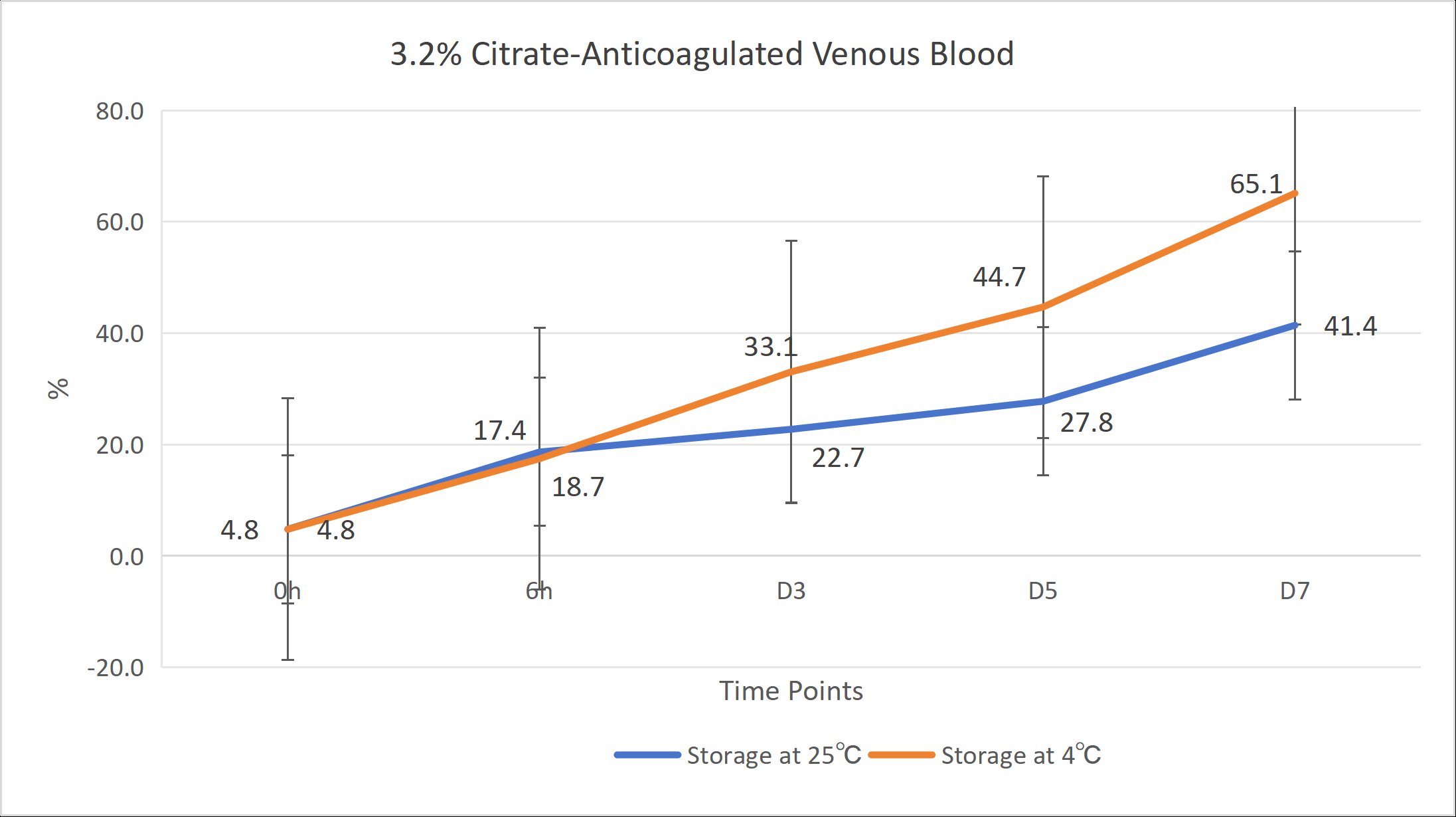
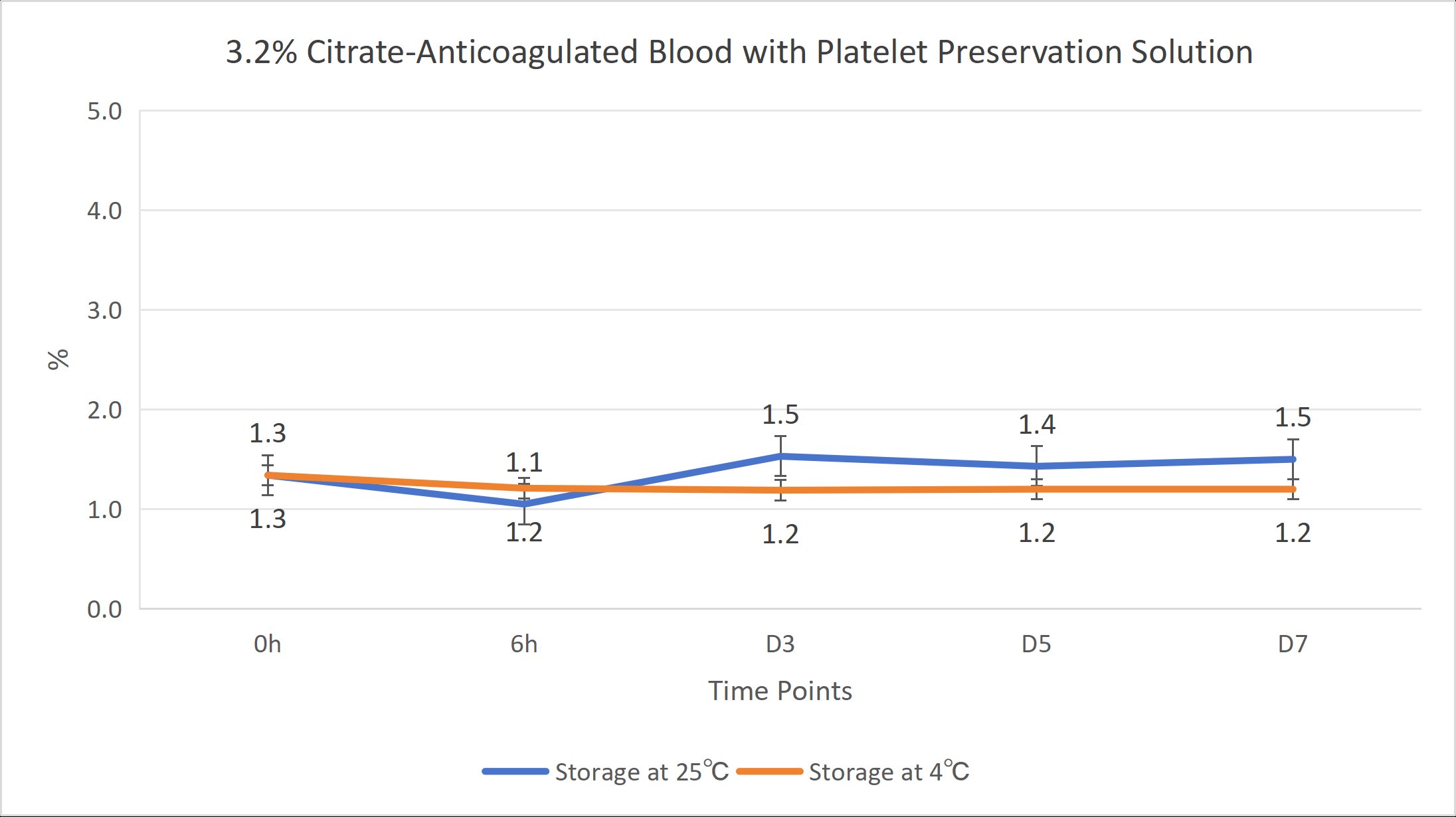
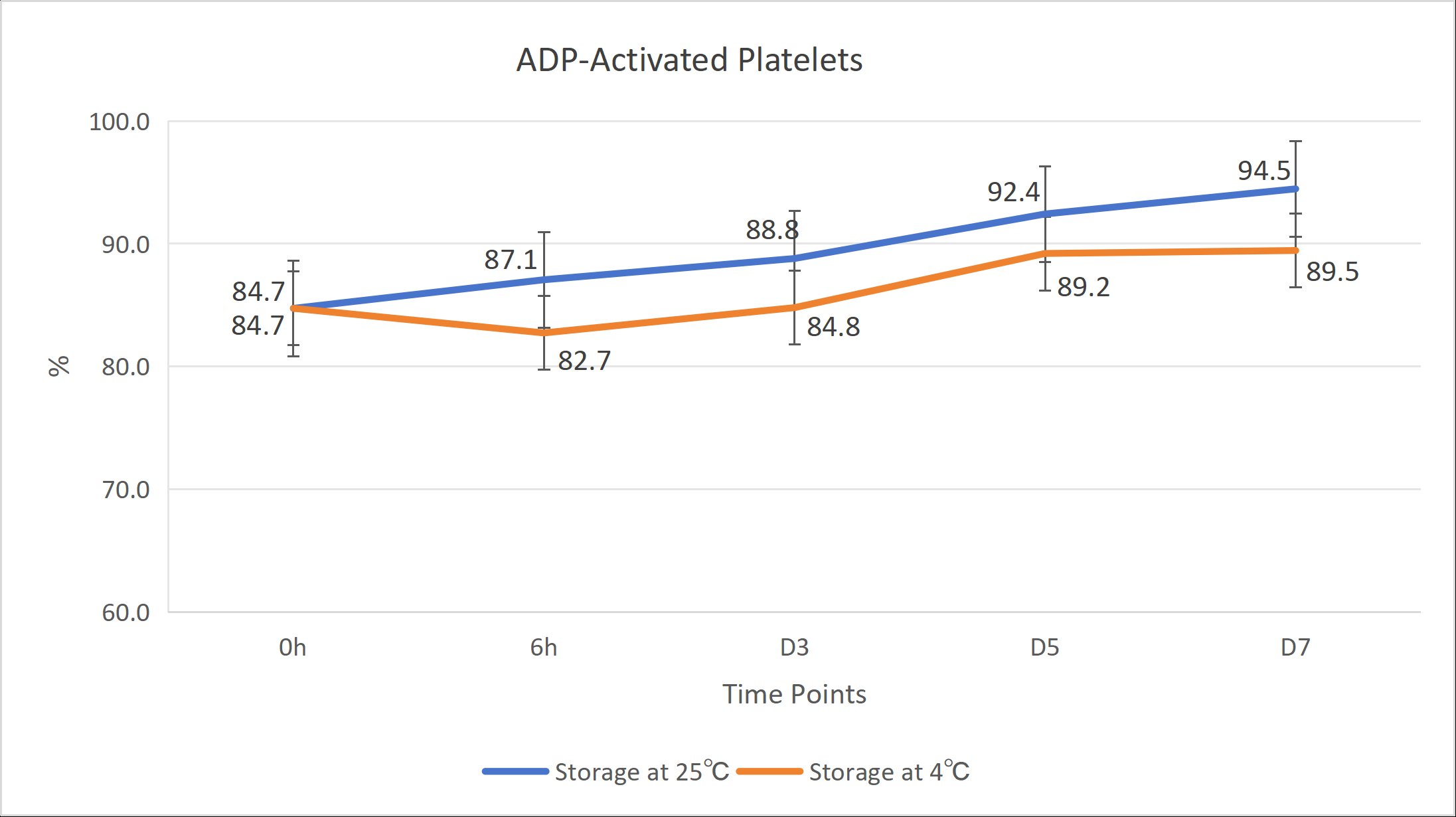
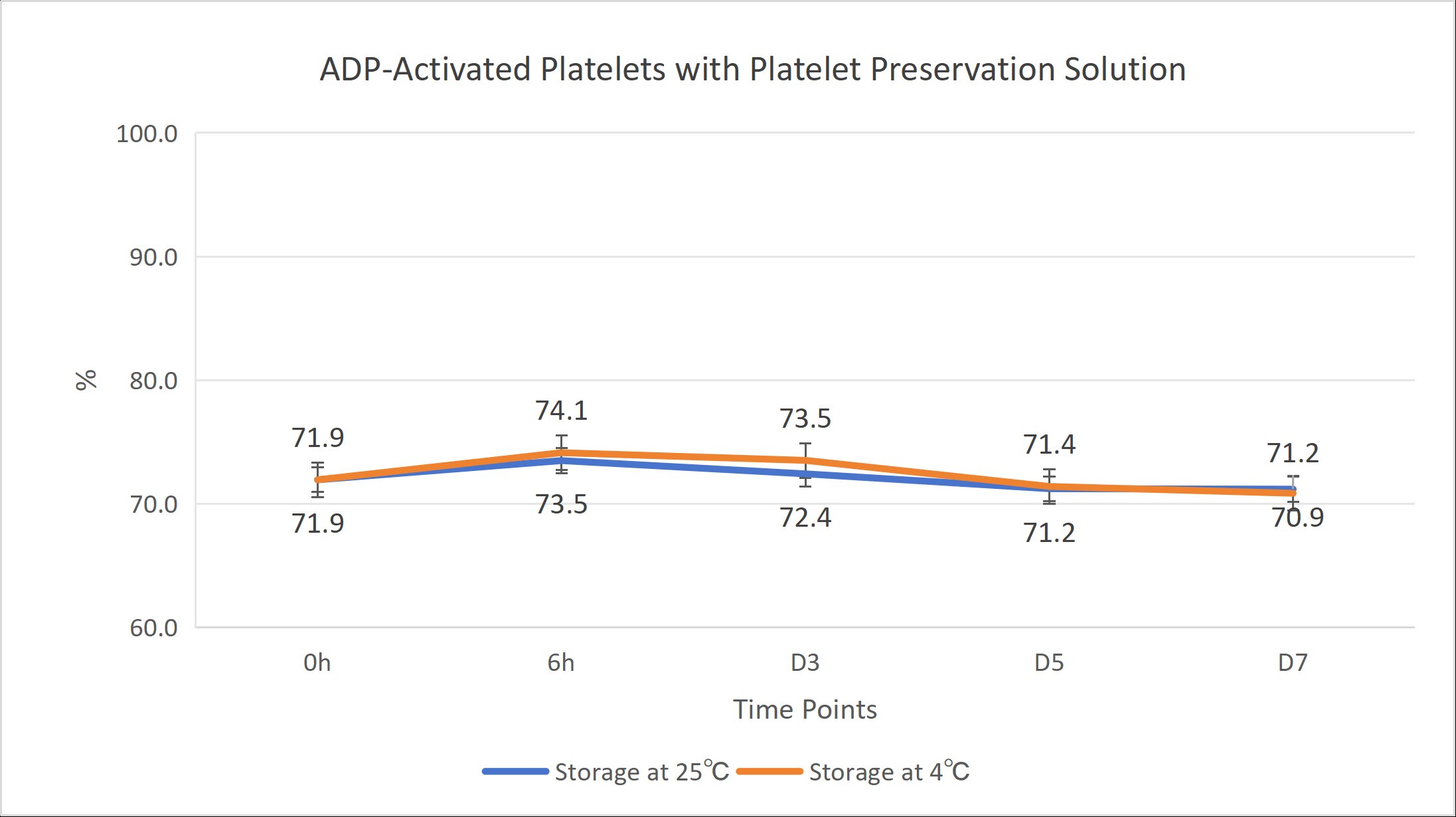
All figures: human reference data, n=10. For Veterinary Use Only. Canine, feline, and other animal validation welcomed.
CD62P scatter plots — human reference sample
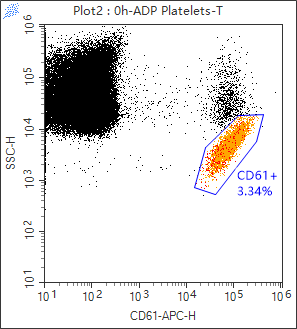
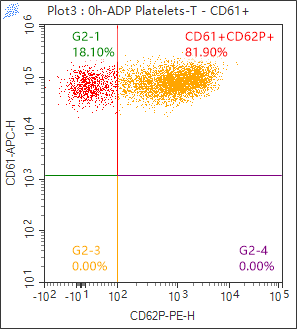
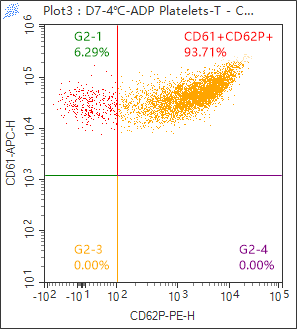
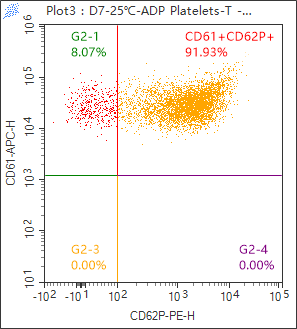
Human reference data. Multicolor flow cytometry, CD61/SSC gating. Click thumbnails to switch panels.
Fig. 2B — 3.2% Citrate + Platelet Stabilization Tube
CD62P remains below 1.1% through Day 7 at both temperatures. The platelet cloud stays entirely in the CD62P-negative quadrant — indistinguishable from the baseline reading.
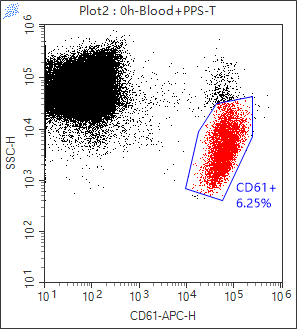
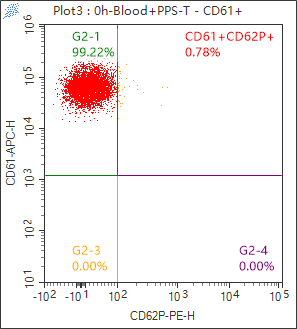
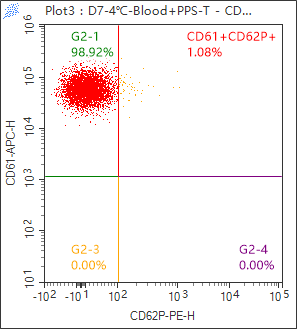
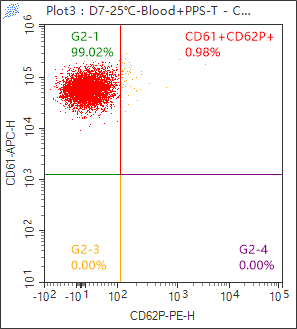
Fig. 2A — 3.2% Citrate-Anticoagulated Venous Blood (Control)
Progressive ex vivo activation clearly visible. By Day 7, the CD62P-positive cloud has expanded dramatically — the sample no longer reflects the donor's in vivo platelet state.
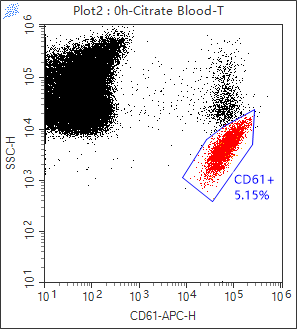
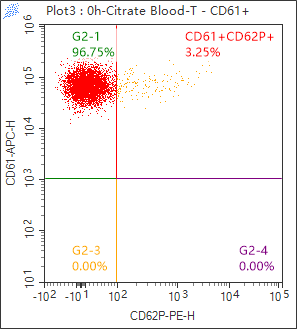
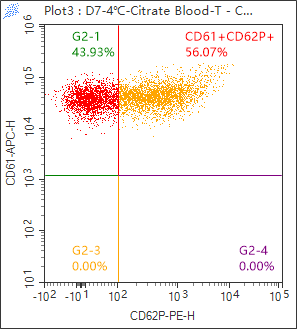
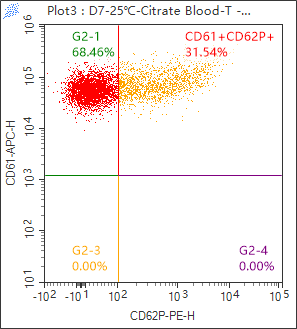
Fig. 2D — ADP-Activated Platelets + Platelet Stabilization Tube
The tube locks in the activation state present at time of collection. ADP-activated signal stable at ~72% through Day 7 at both temperatures — no drift.
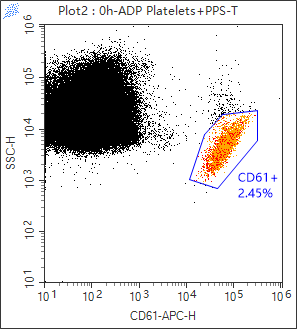
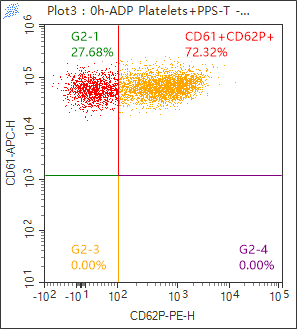
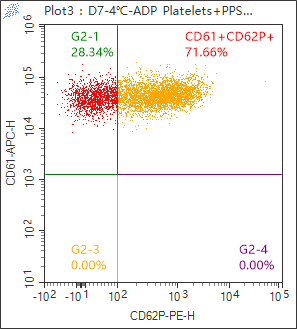
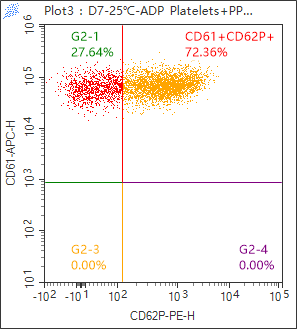
Fig. 2C — ADP-Activated Platelets, Citrate Tube (Control)
ADP-activated platelets in standard citrate continue to drift upward — from 81.9% at baseline to 93.71% at Day 7 / 4°C. The activation state is not preserved.
Human reference data, n=10. For Veterinary Use Only.
- For Veterinary Use Only.
- Performance data established using human whole blood samples.
- Designed to preserve platelets' basal activation status, protecting against the artifactual activation that begins once platelets leave the body. If agonist stimulation is required, agonist must be added to citrate-anticoagulated blood prior to collection into the Platelet Stabilization Tube.
- The vacuum is calibrated to draw exactly 0.5 mL. Overfilling or underfilling will result in an incorrect blood-to-additive ratio and may lead to suboptimal performance. Do not reuse the tube.
Selected literature on canine platelet flow cytometry
The following publications illustrate why standardized, time-stable sample handling matters for platelet flow cytometry in veterinary species — background context, not data generated by IntelliFlow Tech LLC.
Common questions
Can blood be drawn directly into the tube?
Yes. Unlike transfer-based collection tubes, the Platelet Stabilization Tube (Veterinary) is designed for direct venipuncture — draw blood directly into the tube via standard veterinary venipuncture technique. No pre-collection tube or transfer device is needed.
How should filled tubes be shipped?
Filled tubes can be shipped at ambient temperature (22–28°C) for up to 7 days, or at 2–8°C for refrigerated or international shipment. Ship filled tubes according to institutional policies, carrier requirements, and applicable regulations based on the specimen risk assessment. Use leak-proof secondary containers and absorbent material.
Can I use any flow cytometer?
Yes. The Platelet Stabilization Tube is compatible with all major flow cytometer platforms and antibody vendors including BD Biosciences and Beckman Coulter. No special instrument settings are required.
What happens if I overfill or underfill the tube?
The vacuum is factory-calibrated to draw exactly 0.5 mL directly from the animal. Overfilling or underfilling changes the blood-to-additive ratio and may lead to suboptimal stabilization. Once the vacuum draw stops, do not attempt to draw additional blood.
| Product name | Platelet Stabilization Tube |
| Catalog number | ZK202603 |
| Format | Standard vacuum tube · medical-grade glass · yellow cap |
| Draw volume | 0.5 mL whole blood · blood-to-additive ratio 1:1 |
| Dimensions | 8 ±0.5 mm OD × 75 ±2.0 mm length |
| Shelf life (unopened) | 24 months · store at 22–28°C · transport 15–30°C · Do not freeze · Protect from direct sunlight |
| Post-collection stability | 7 days at 22–28°C (room temperature) or 2–8°C (refrigerated) |
| Package size | 50 tubes per pack |
| Compatibility | All major flow cytometers · BD Biosciences · Beckman Coulter · all major antibody vendors |
| Regulatory status (US) | For Veterinary Use Only |
| Labeling | English labeling · English Instructions for Use (IFU) |